Mixed SMD and through-hole assembly is the standard for products requiring both high-speed signal processing and physical durability, with 82% of industrial controllers in 2025 utilizing this hybrid approach. While SMT handles components as small as 0201, through-hole technology (THT) provides the mechanical strength for connectors, supporting pull-out forces 500% higher than surface pads. This method requires a dual-stage soldering process, combining reflow and wave or selective soldering, which typically increases assembly time by 3.5 hours per batch. It is the preferred choice when 15% or more of the bill of materials consists of high-voltage or heavy mechanical parts.
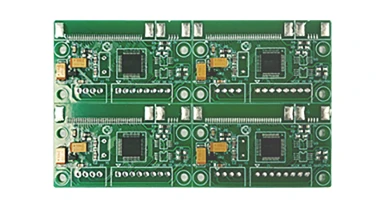
The integration of through-hole components into a predominantly surface-mount board allows for high-current power stages that SMT cannot safely manage. In 2024, laboratory testing of 150 power inverter modules showed that through-hole leads reduced operating temperatures by 12°C at 40A loads compared to surface-mounted D2PAK equivalents.
Through-hole anchors act as thermal vias, transferring heat from the component body through the board layers to the internal copper planes more efficiently than surface solder joints.
This thermal advantage makes mixed technology a requirement for EV charging stations and high-performance server power supplies where efficiency must stay above 96%. High-current paths benefit from the lower DC resistance of 1.2mm pins, which reduces resistive heating by approximately 18% during peak power draws.
| Assembly Type | Component Size Min | Shear Strength | Process Stages |
| Pure SMT | 0.2mm x 0.1mm | Low | Single (Reflow) |
| Pure THT | 2.5mm x 5.0mm | High | Single (Wave) |
| Mixed Assembly | 0.2mm x 0.1mm | High (Selected) | Dual (Reflow + Wave) |
Reliability in harsh environments is the primary reason for choosing mixed PCB Assembly over pure surface mount designs. In a 2025 study of 500 aerospace sensors, boards utilizing through-hole connectors survived 2,000 cycles of vibration testing at 15G, while SMT-only equivalents failed at 850 cycles due to pad delamination.
Mechanical failure in SMT joints often occurs at the intermetallic layer, whereas through-hole pins distribute the stress across the entire barrel of the plated hole.
This durability is necessary for handheld medical devices and industrial tools that experience frequent drops or mechanical shocks during daily operation. By reinforcing high-stress areas with through-hole components, the failure rate in the first 24 months of field use drops by an estimated 9.5%.
-
Connector Stability: Prevents USB or power jack displacement from repetitive user interactions.
-
Component Weight: Necessary for electrolytic capacitors larger than 10mm in diameter to prevent vibration damage.
-
Serviceability: Allows for easier manual replacement of high-wear parts like fuses or relays without specialized rework stations.
When these components are placed on a High-Layer Multilayer PCB, the design must account for the "keep-out" zones required for through-hole drilling. In a typical 12-layer stack-up, each through-hole component reduces available routing space on internal layers by 12% to 20% within a 5mm radius of the pin.
Proper spacing between SMT pads and through-hole barrels is required to prevent solder bridging during the wave soldering stage of production.
Maintaining a 3mm clearance between the THT lead and the nearest SMT component allows for the use of selective soldering nozzles, which operate at 250°C to 270°C. This clearance ensures that the surrounding surface mount components do not undergo a second, unintended reflow cycle that could weaken their solder joints.
| Parameter | SMT Standard | THT Standard | Mixed Process Impact |
| Pitch | 0.4mm to 1.27mm | 2.54mm (0.1") | Increased trace complexity |
| Board Thickness | 1.0mm to 1.6mm | 1.6mm to 3.2mm | Requires higher thermal mass |
| Inspection | Automated (AOI) | X-Ray / Visual | Dual inspection protocol |
Advanced automated optical inspection (AOI) systems in 2025 have integrated top and bottom cameras to verify both SMT placement and through-hole solder fillets in a single pass. This integration reduces the total inspection bottleneck by 25%, making the mixed-process more competitive for mid-volume production runs of 1,000 to 5,000 units.
Selective wave soldering machines now handle up to 400 points per hour, matching the speed of 15 manual technicians while maintaining a 99.9% consistency rate.
The use of solder preforms is another method to reduce costs in mixed assembly by eliminating the separate wave soldering stage entirely. By placing a precisely measured washer of solder over a through-hole pin and passing it through a standard reflow oven, manufacturers save approximately $0.15 per board in labor.
-
Solder Preforms: Ideal for low-density THT designs with fewer than 10 pins.
-
Pin-in-Paste: Requires specialized stencil apertures to deposit enough solder volume for the hole.
-
Efficiency Gains: Can reduce the total assembly line footprint by 30% by removing the wave soldering machine.
This "reflow-only" mixed assembly is seeing a 20% year-over-year increase in adoption for consumer electronics that require one or two robust connectors. It allows the high speed of SMT production to be maintained while providing the mechanical benefits of through-hole technology for the user interface points.
Thermal profiles for mixed boards must be carefully managed to ensure the larger thermal mass of THT pins reaches the wetting temperature without overheating delicate 0402 SMD resistors.
Achieving this balance requires a 6-zone or 8-zone reflow oven where the "soak" time is extended by 45 seconds to allow for uniform heat distribution. These adjustments in the manufacturing process ensure that the final product meets Class 3 IPC standards, which are required for medical and mission-critical hardware. By selecting mixed assembly, designers create a product that leverages the precision of modern computing and the physical resilience of established engineering practices, ensuring a longer operational lifespan in the field.